
We’ve released Deliverable D1.3 — “In-Flight Measurements in Low-soot Regime”!

We’ve released Deliverable D1.3 — “In-Flight Measurements in Low-soot Regime”!

New A4CLIMATE deliverable explores contrail formation in the low-soot regime

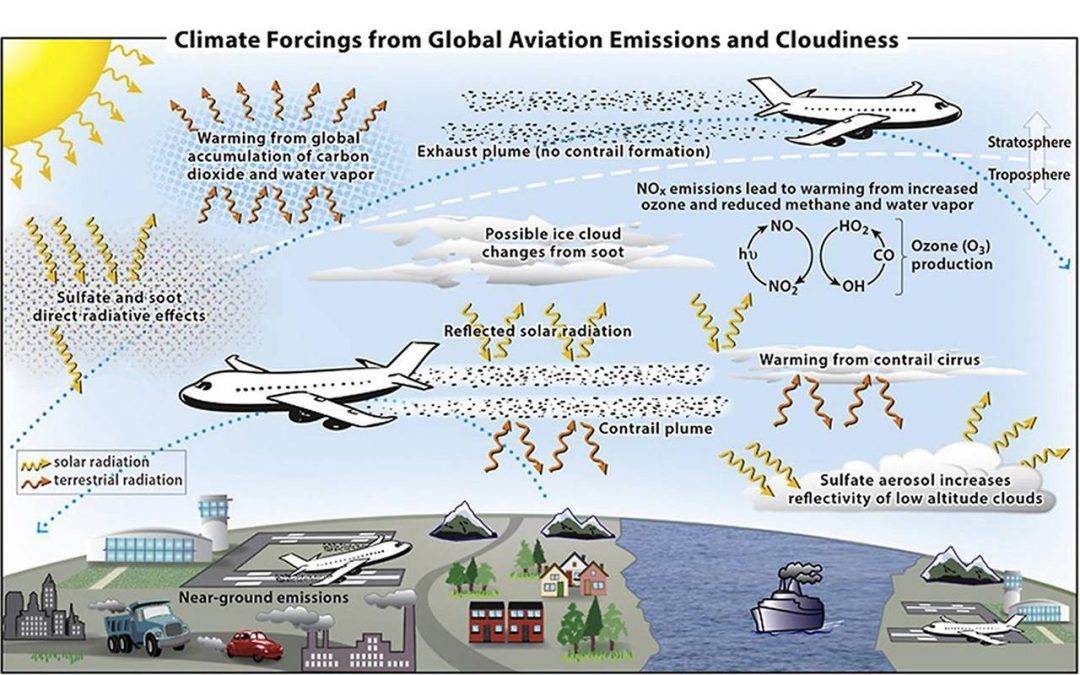
A4CLIMATE has released its latest public deliverable, D1.3 – In-flight measurements in low-soot regime, providing new insights into how modern aircraft engines and fuel composition influence aerosol emissions and contrail formation.

The report brings together in-flight measurements from the ECLIF3, NEOFUELS/VOLCAN and ecoDemonstrator campaigns, covering both conventional rich-quench-lean and modern lean-burn engine technologies, as well as conventional jet fuel and sustainable aviation fuels (SAF).

A key finding is that contrail formation behaves differently depending on the engine emission regime. While lower soot emissions can reduce contrail ice crystal numbers in soot-rich conditions, very low-soot lean-burn engines can still produce substantial numbers of contrail ice crystals due to volatile particles formed from sulfur compounds, organic vapours and lubrication oil.

These results provide an important observational basis for improving contrail models and for better assessing the climate impact of future aircraft technologies and fuels.

Read the full deliverable: D1.3 – In-flight measurements in low-soot regime.
     

    A4Climate partners share some exciting outcomes

    A4Climate partners share some exciting outcomes

    Our A4Climate partners share some exciting outcomes from the workshop hosted last week by Imperial College London / Contrails.org on contrail science!
    The event brought together experts from academia, aviation, and policy to discuss the latest advances in contrail prediction, monitoring, observation and mitigation. Key takeaways included:

    • The importance of high-resolution weather data and observational data to improve contrail forecasts.
    • Updated models and improved systems to feed into operational strategies for contrail avoidance that can deliver measurable climate benefits with minimal fuel penalties.
    • The role of collaborative trials in bridging scientific research with day-to-day airline operations.

    For A4CLIMATE, these insights directly support our upcoming 400-flight demonstration campaign and the integration of tools like PyContrails and CoCiP into real-world flight planning. By linking cutting-edge research with operational practice, we move closer to our goal: reducing aviation’s non-CO₂ climate impact and advancing climate-neutral aviation in Europe.

    Stay tuned as A4CLIMATE partners continue to turn research into actionable solutions for sustainable skies!

    To70 Aviation, Deutsches Zentrum für Luft-und Raumfahrt e.V., Imperial College London / Contrails.org, Flightkeys GmbH, TUI, EUROCONTROL

    A4Climate Project Launches with Successful Kick-Off Meeting

    A4Climate Project Launches with Successful Kick-Off Meeting

    The A4Climate project officially launched with a dynamic and collaborative kick-off meeting held in February 2025, bringing together 17 partner institutions from 9 countries. Hosted by the project coordinator – the German Aerospace Center (DLR) – in Oberpfaffenhofen, the event marked the beginning of a four-year effort to advance research and innovation aimed at reducing aviation’s non-CO₂ climate impacts—particularly those from contrails.

    The A4Climate consortium unites experts from academia, national weather services, airlines, air traffic management, and industry. Over the course of the meeting, partners aligned on project objectives, detailed the technical and administrative framework, and reviewed the timeline and contributions across six work packages.

    The meeting underscored the importance of interdisciplinary collaboration and open science in delivering A4Climate’s ambition: to accelerate evidence-based climate mitigation in aviation through cleaner fuels, advanced engine technologies, and climate-optimized flight operations.

    With strong momentum and shared commitment, A4Climate is now fully underway—paving the path toward climate-compatible aviation.