
A4Climate Consortium:
United for Climate-Neutral Aviation
Seventeen partners from science, industry, and aviation join forces across nine countries to reduce aviation’s non-CO₂ climate impact through research, innovation, and real-world demonstration.
The A4Climate consortium brings together 17 partners from nine countries, combining leading expertise from research, industry, aviation operations, and policy support. The project is coordinated by the German Aerospace Center (DLR) and unites organizations across Europe and beyond to address aviation’s non-CO₂ climate effects caused by contrails.
Together, these partners will carry out advanced research, operational flight demonstrations, and policy engagement to develop and validate tools that can reduce the climate impact of aviation. This cross-sector collaboration ensures that A4Climate’s scientific insights translate into practical solutions for climate-optimized flight operations and cleaner propulsion systems.
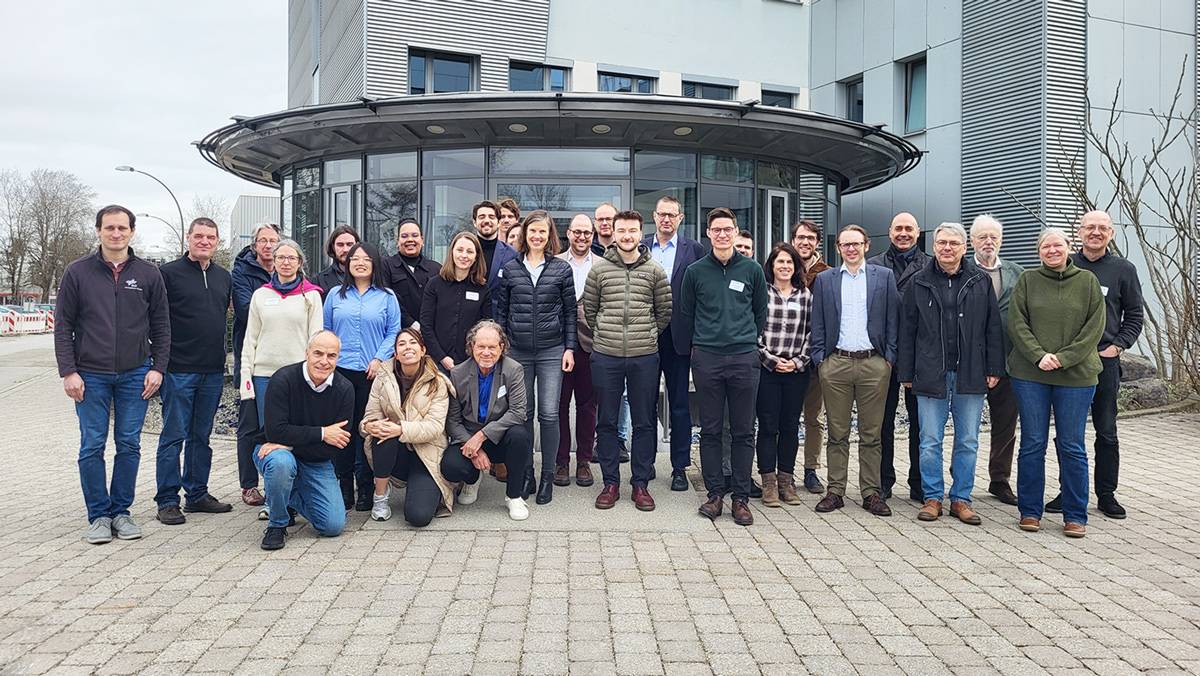
A4Climate Meeting by DLR in Oberpfaffenhofen
Partners
DEUTSCHES ZENTRUM FUR LUFT - UND RAUMFAHRT EV
Köln, Germany

DEUTSCHER WETTERDIENST
Offenbach am Main, Germany

INSTITUTUL NATIONAL DE CERCETARE-DEZVOLTARE AEROSPATIALA "ELIE CARAFOLI"- INCAS BUCURESTI
București, Romania

MAX PLANCK INSTITUTE FOR CHEMISTRY
Mainz, Germany

IMPERIAL COLLEGE OF SCIENCE TECHNOLOGY AND MEDICINE
JOHANNES GUTENBERG-UNIVERSITAT MAINZ
Mainz, Germany
JOHANN WOLFGANG GOETHE-UNIVERSITAET FRANKFURT AM MAIN
Frankfurt am Main, Germany

UNIVERSITY OF LEEDS
Leeds, United Kingdom
THE UNIVERSITY OF READING
Reading, United Kingdom

FLIGHTKEYS GMBH
Wien, Austria

TO70 BV
Den Haag, Netherlands

PNO Innovation Germany (fka ARTTIC)
München, Germany

SOPRA STERIA GROUP
Annecy-le-Vieux, France

TUIfly GmbH
Langenhagen, Germany
Associated partners

Contrails.org
UK

EUROCONTROL - EUROPEAN ORGANISATION FOR THE SAFETY OF AIR NAVIGATION
Bruxelles, Belgium

EIDGENOESSISCHE TECHNISCHE HOCHSCHULE ZUERICH
Zürich, Switzerland
Germany
German Aerospace Center (DLR)
About
The German Aerospace Center (Deutsches Zentrum für Luft- und Raumfahrt; DLR) is Germany’s national research and technology centre for aeronautics, space, energy, transport, security and defence. DLR’s work spans a wide range of applications, delivering results and innovations that benefit industry and business, government agencies and the public sector. At the heart of DLR’s mission is its commitment to society, which it fulfils through extensive knowledge sharing and targeted technology transfer. Therefor it is funded through federal resources. The German Space Agency at DLR is responsible for planning and implementing German space activities on behalf of the federal government. Additionally, two project management agencies at DLR manage research and industrial funding programmes.
Earth’s climate is changing, along with global mobility and technology. DLR harnesses the expertise of its 51 research institutes and facilities to develop solutions to these challenges. All 11,000 employees share a common mission: to explore Earth and space while developing technologies for a sustainable future. DLR’s technologies are not confined to the laboratory, but are transferred to wider society, strengthening Germany’s position as a prime location for research and industrial innovation.
Role in the project
DLR’s Institute of Atmospheric Physics, with its Department of Cloud Physics, has a strong research focus on the climate impact of aviation, specifically on quantification of aviation’s non-CO2 effects. This includes the contrail model CoCiP, used for climate friendly aircraft routing and to assess the effects of fuel and engine technology on emissions and climate. The department head Prof. Christiane Voigt also leads the A4Climate consortium.
The Flight Experiments Facility operates the HALO research aircraft, and is expert for in-flight emission and contrail measurements.
Team
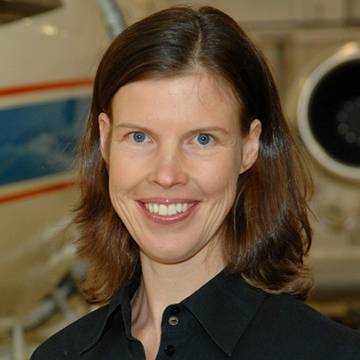
Christiane Voigt
Professor, head of the Department of Cloud Physics in the Institute of Atmospheric Physics

Daniel Sauer
Doctor, research fellow

Tina Jurkat-Witschas
Doctor, reserach fellow
Germany
Deutscher Wetterdienst
About
The Deutscher Wetterdienst (DWD) is responsible for meeting the meteorological requirements arising from all areas of economy and society in Germany. DWD’s duties result from the legal mandate to inform and undertake research as laid down in the Deutscher Wetterdienst Act (PDF, 127KB, Accessibility / accessible)
This includes amongst others with respect to the project:
- Providing meteorological information and services to ensure the safety of aviation. DWD’s Aeronautical Meteorological Service is SES-certified and is part of the system to ensure the global safety of civil aviation and provide it with meteorological information.
- Analysing and predicting meteorological and climatological processes as well as analysing and projecting climate change and climate change impacts.
Role in the project
In this project, DWD will demonstrate that it can contribute to further improvements in the prediction of relative humidity over ice (rhi) by assimilating all-sky satellite observations and other observational data from DLR aircraft measurement campaigns into NWP (Numerical Weather Prediction) data assimilation. Rhi is of great importance in the context of contrail avoidance as an input variable for regions of super ice supersaturation (ISSR) and climate response models.
Team
Dr. Stefanie Holborn
Head of section Observation Modelling and Verification
Dr. Björn Beckmann
Deputy
Alexander Cress
Deputy
Romania
Institutul Național de Cercetare-Dezvoltare Aerospațială „Elie Carafoli” – INCAS
About
INCAS – National Institute for Aerospace Research and Development “Elie Carafoli” is Romania’s leading aerospace research institute and a key player in Central and Eastern Europe. With over 70 years of tradition, INCAS conducts fundamental and applied research in aerodynamics, flight dynamics, aerospace structures, propulsion, advanced materials, testing equipment, and atmospheric observation systems. The Ambient Aerodynamics Unit contributes to atmospheric research through studies on cloud and aerosol microphysics, measurement of pollutant concentrations, and Earth Observation using LiDAR and GIS technologies. These activities are supported by a high-level research infrastructure, which includes airborne platforms and ground stations, integrated into European research networks. A central element supporting these activities is the Beechcraft King Air C90-GTx aircraft, equipped with two under-wing cloud probes: CAPS (Cloud, Aerosol and Precipitation Spectrometer) and SPEC Hawkeye.
Role in the project
Within A4Climate, INCAS brings in relevant expertise in airborne measurements and scientific analysis of microphysical properties of clouds and will be involved the Aerocloud mission and analysis of data collected with cloud probes.
The INCAS team will actively participate in the activities of work package number 2:
- Task 2.1: Preparation of aircraft, selection of aerosol instrumentation
- Task 2.2: Scientific instrument operation and technical data evaluation
- Task 2.3: Scientific data evaluation
Team
Address
Bucuresti, Romania
Germany
Max Planck Institute for Chemistry
About
Current research at the Max Planck Institute for Chemistry (MPIC) aims at an integral understanding of chemical processes and related effects in the Earth system, particularly in the atmosphere, biosphere, and oceans. Investigations address a wide range of interactions between air, water, soil, life and climate in the course of Earth history up to today. The MPIC was founded in 1912 as the Kaiser Wilhelm Institute for Chemistry in Berlin, and it was relocated to Mainz in 1949. Currently, the institute employs some 350 staff in four departments (Aerosol Chemistry, Atmospheric Chemistry, Climate Geochemistry, and Multiphase Chemistry) and additional research groups. Scientists conduct laboratory experiments, collect samples and record measurement data during field campaigns utilizing airplanes, ships, and vehicles. The practical work is complemented with mathematical models that simulate chemical, physical, and biological processes from molecular to global scales. One of the major goals is to find out how air pollution, including reactive trace gases and aerosols, affect the atmosphere, biosphere, climate, and public health.
Role in the project
The group of J. Schneider, part of the Aerosol Chemistry Department at MPIC, conducts particle composition measurements during the aircraft-borne mission AEROCLOUD. Two aerosol mass spectrometers, namely the single particle instrument ALABAMA and a compact time-of-flight aerosol mass spectrometer (C-ToF-AMS) will be used to identify aircraft emission particles in cirrus and contrail residuals, but also in the surrounding cloud-free air. The group leads work package 2 which is coordinating the A4Climate part of AEROCLOUD. Additionally, the group is part of work package 1 and takes part in a ground-based field measurement campaign close to a commercial airport.
Team
United Kingdom
Imperial College London
About
Imperial College London is a world-leading university renowned for excellence in science, engineering, medicine, and business. The Department of Civil and Environmental Engineering solves global challenges across the natural and built environment through world leading education, research and innovation. Imperial research is advancing sustainable aviation through innovations in advancing understanding of aviation non-CO2 impacts, understanding of low-carbon fuels and cleaner propulsion systems.
Role in the project
Imperial is leading Work Package 1. This work will focus on key knowledge gaps on how cleaner engines and Sustainable Aviation Fuels (SAF) influence contrail formation. By identifying how volatile particles (vPM) like oil droplets and sulfates trigger contrails in the absence of soot, WP1 will support the development of future low-emission engine technologies with lower climate impact. Imperial’s work will use state-of-the-art experimental measurements to advance the modelling of ice nucleation in contrails. Imperial is also a contributor to WP5, responsible for running simulations of contrail climate impacts under several future scenarios.
Team
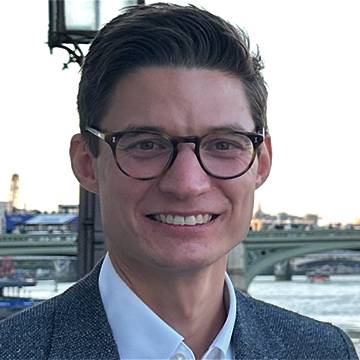
Marc Stettler
Professor in Transport and Environment

Joel Ponsonby
Research Associate
Germany
Johannes Gutenberg University Mainz
About
The Johannes Gutenberg University Mainz (JGU) addresses climate change and sustainability through several pathways. With the Institute for Physics of the Atmosphere (IPA), JGU contributes with meteorological research to the topic of climate change. IPA focuses on physical and chemical properties of the atmosphere with a special interest in the upper troposphere and lower stratosphere. IPA has a strong background in performing airborne experiments, performing technical data evaluation as well as scientific analysis of airborne observations especially humidity observations including model comparison. IPA has expertise in airborne experiments dedicated to sample contrails and exhaust plumes of aircraft. IPA’s background extends also in the research area of non CO2 effects from aircraft, especially of ice supersaturated regions as a prerequisite for contrail formation.
Role in the project
In A4CLIMATE the role of JGU is to lead WP4 and brings in it’s expertise. During the HALO AEROCLOUD mission, JGU performs humidity observations with in situ instrumentation including technical analyses, followed by the performance of the scientific humidity analysis and determination of ISSRs (WP 2.3). Further, JGU analysis also relative humidity observations of previous aircraft missions to investigate regions of ice supersaturation, the prerequisite for contrail formation, and assesses the humidity forecast of ECMWF IFS data as well as improving the ERA5 NWP humidity data sets by using Artificial Neural Network methods based on available observational data sets (e.g. IAGOS data) in WP4.2.
Team
Germany
Goethe University Frankfurt am Main, Institute for Atmospheric and Environmental Sciences
About
In the group of atmospheric environmental analytics, we focus on the chemical characterization of particulate matter from urban, rural and remote locations, from the boundary layer to the upper troposphere and lower stratosphere. We develop new approaches involving high-resolution mass spectrometry, such as non-target analysis after chromatography, or in-situ real-time mass spectrometry, to understand how anthropogenic emissions have changed the natural composition of our atmosphere.
Role in the project
We will perform a comprehensive physicochemical characterization of aviation-related PM emissions. Measurements will be conducted at a major airport using state-of-the-art aerosol instruments to analyze particle size distributions, chemical composition, and volatility. Additionally, offline samples will be collected for further detailed chemical analysis. The research will assess the real-world contribution of volatile PM (vPM) to total PM emissions from aircraft exhaust in the vicinity of airports. Advanced mass spectrometry techniques will be used to achieve a high level of detail in the chemical characterization of vPM, identifying e.g. engine-specific tracers.
Team
Prof. Dr. Alexander Vogel
Professor
United Kingdom
University of Leeds
Role in the project
We will be using the state of the art Portable Ice Nucleation Experiment (PINE) chamber to conduct studies into the formation of contrails. We will do so by burning a variety of fuels in a Honeywell Auxiliary Power Unit and sampling the exhaust into PINE.
Team
Jack Patrick Macklin
Postdoctoral Researcher
United Kingdom
University of Reading
About
The Department of Meteorology of the University of Reading does fundamental research in weather, climate, atmospheric physics and related fields. For A4Climate, Reading provides expertise in radiative forcing, reduced complexity climate models, CO2 equivalence metrics.
Role in the project
Reading assesses the climate outcome of contrail avoidance for optimized flights using different CO2 equivalence metrics and time horizons.
Team
Nicolas Bellouin
Professor of Climate Processes
Austria
FLIGHTKEYS Gmbh
About
FLIGHTKEYS – an Austrian-based global flight planning service provider – has been founded in April 2015 by a team of passionate and high profile aviation experts with very specific knowledge and long-term experience in the field of flight planning & optimization:
“Our mission is to completely re-write the science of flight management for the 21st century by precisely meeting the emerging requirements of cost-optimized airline operations, trajectory-based operations and reduction of emissions. Our research takes place in a corporate climate that promotes innovation, continuous search for excellence and ensures we have fun in what we are doing. Our focus is on affordable, user-friendly systems that provide the ultimate level of cost optimization and integrate seamlessly into future airline operations and ATM systems. FLIGHTKEYS 5D – as the only 21st century flight management system – will balance airline network throughput, greenhouse gas emissions and safety in the most cost-efficient way and covers a scope far beyond any solution currently available on the market. By improving communication and collaboration amongst stakeholders in the aviation industry it will lead to a smarter and more productive use of aircraft and airspace. Our vision is now swiftly taking shape in an unprecedented clean-sheet development approach with a fast-growing team of top software developers and aviation experts. So watch us closely, or feel free to invite us to present our new 5D solution.”
Role in the project
FLIGHTKEYS performs two roles, first as a Work Package (WP) Lead and secondly as a project partner.
As WP 3 Lead we assist in facilitating the execution of the flight trials and data collection to be carried out within our WP tasks.
Additionally, as a project partner, we are supporting the development of contrail flight trail research by collecting and assisting in the analysis of trial data.
Team

Raimund Zopp
Director of Innovation and Co-Founder

Larissa Houston
R&D Project Manager and Legal

Alejandra Martin Frias
Head of Sustainability Research
The Netherlands
To70 BV
About
Founded in the Netherlands in 2000 and expanded to 13 offices across the globe, To70 is one of the world’s leading aviation consultancies.
To70 serves the aviation community by designing and optimising airport and airspace operations. Its mission is to help society and industry address the air transport challenges they face by delivering outstanding independent consultancy services.
Society’s growing demand for transport and mobility can be met in a safe, efficient, environmentally friendly, and economically viable manner. With a diverse team of experienced aviation consultants who possess first-hand knowledge across diverse range of aviation topics, To70 provides practical solutions and expert advice for its clients.
Role in the project
To70 BV (To70) will support the A4Climate project by creating recommendations for policy measures and leveraging their experience in airspace and airport operations to support mapping of non-CO2 climate costs against operational costs of non-CO2 mitigation measures. To70’s experience in translating aviation specific research, data and analysis to policy makers on both national and international levels will ensure strong dissemination of A4Climate results, which prove to be beneficial for the sector and the climate.
Team
Vincent de Haes
Senior Sustainable Aviation Consultant
Rogier Hendriks
Air Traffic Management Expert
Jan van Manen
Aviation Consultant
Lidia Rzeplinska
Junior Aviation Consultant
Germany
PNO Innovation Germany (fka ARTTIC)
About
PNO Innovation GmbH (PNO) is part of the PNO Consultants Group, the European leader in collaboration engineering, consultancy and management services for international research and technology related partnerships. Based in Munich and active since 2006, the team provides strategic and operational support throughout the entire innovation lifecycle—from concept development and funding acquisition to project implementation, stakeholder engagement, and impact realisation. With experience in over 28 EU-funded projects, PNO Innovation GmbH helps research institutions, companies, and public bodies turn complex ideas into successful collaborations. Its multidisciplinary team applies proven methodologies across sectors such as aviation, energy, health, and security, supporting the transition to a greener, more innovative Europe.
Role in the project
PNO brings long-standing expertise in managing European research and innovation projects. Within A4CLIMATE, it helps ensure smooth coordination, efficient collaboration, and high-quality outcomes. PNO supports partners with planning, reporting, and risk management, while also driving communication, dissemination, and stakeholder engagement. Its work strengthens project impact, fosters knowledge sharing, and helps connect scientific results with industry, policy, and society.
Team

Cindy Steinmetz
Expert Consultant


Sandra Annetzberger
Senior Consultant

France
SOPRA STERIA
About
Sopra Steria Group is a major Tech European player in consulting, digital services, and software development. The company is recognized for its expertise in system engineering, ATM operations, and data platforms enabling service interoperability, as well as its strong capabilities in simulation tools and innovative digital solutions.
With its unique positioning combining technological excellence and support for digital transformation, Sopra Steria helps its clients achieve tangible and sustainable results, while strengthening both performance and innovation capacity.
Role in the project
Sopra Steria Group (SSG), as task leader, develops and delivers software interfaces to visualize contrail-related information such as predictability, uncertainty, climate impact and costs. Based on stakeholder requirements, SSG ensures user-oriented design and integrates results on mitigation measures (SAF, advanced engines, climate-optimized routing). SSG also defines representative use cases to demonstrate functionalities and leads the mapping of operational costs of non-CO₂ mitigation options.
Team
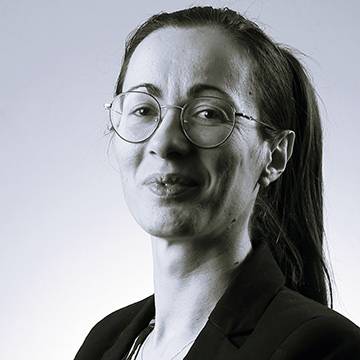
Christelle Lerat
Project Manager
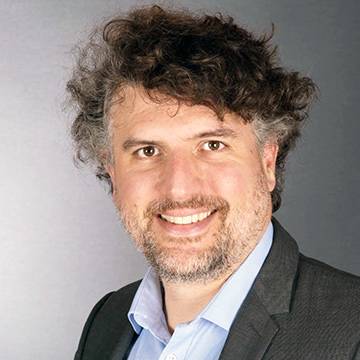
David Elmalem
Project Director
Germany
TUIfly GmbH
About
TUI fly Germany is one of five airlines within the TUI Group – the world’s leading integrated tourism business. Under the umbrella of TUI Airline, the Group operates a fleet of around 130 aircraft with more than 8,000 colleagues based in Germany, the Netherlands, Belgium, the United Kingdom and Sweden, flying to over 180 destinations worldwide.
With its 23 modern Boeing 737 aircraft, TUI fly Germany connects travellers to the most popular holiday regions, including the Mediterranean, the Canary Islands, the Cape Verde Islands, Madeira and Egypt.
TUI Airline is currently renewing and modernising its European fleet with the latest generation of Boeing 737 aircraft. The aim is to make flights more economical, cost-efficient and carbon-efficient. In addition, TUI Airline has committed to ambitious emission reduction targets and is the first leisure airline with validated science-based targets.
Role in the project
TUI fly is the sole airline participating in the project and will provide ~400 flights for which contrail optimised flight plans will be generated and flown. Based on specific atmospheric conditions specific flights will be selected for post flight contrail avoidance assessments.
TUI’s key tasks, apart from executing the flights will be to provide route specific data may also include flight plans, location data, wind and temperatures. The airline will also provide operational observations and highlight complexities related to all phases of trials, which will include flight plan configuration stage, dispatch clearance, in-flight execution and data feedback to inform future flight planning.
Team

Christoph Todt
Head of Environmental Sustainability
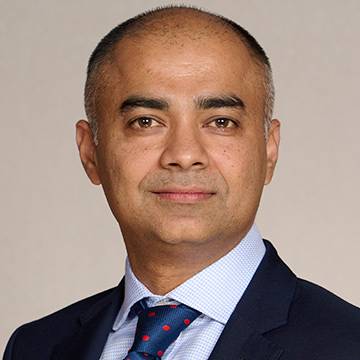
Devaiah Nalianda
Manager – Strategic Decarbonistion Programme , Airline Environmental Sutainability

Frank Brunkalla
Senior Expert Navigational Systems & Dispatch, Navigation
Address
Langenhagen, Germany
United States
Contrails.org
About
Contrails.org is a non-profit applied research organization that brings together leading scientists, technologists, and industry experts to accelerate the scientific research, technological innovations and operational improvements needed to make contrail management a practical reality.
Role in the project
Support research activities with model and data access.
Team

Marc Shapiro
Director

Tom Dean
Research Director

The Netherlands
EUROCONTROL Maastricht Upper Area Control Centre MUAC
About
The Maastricht Upper Area Control Centre (MUAC) manages the upper airspace (from 24,500 to 66,000 feet) over Belgium, the Netherlands, Luxembourg and north-west Germany – one of Europe’s busiest and most complex airspace areas.
We are pioneers in the delivery of customer-focused, reliable and impartial air traffic management services.
We are the only cross-border civil-military air navigation service provider in Europe and have played a pivotal role in integrating European airspace, building our services around traffic flows not national borders.
Role in the project
Maastricht Upper Area Control Centre (MUAC) has a unique expertise in operational contrail mitigation.
In 2021, MUAC conducted the world’s first large-scale and long-duration trial, which was a groundbreaking effort to better understand contrail prevention. This pioneering work continued in 2023 when MUAC carried out the first real-time simulations with 23 air traffic controllers to delve into the complexities of contrail prevention. MUAC developed the first operational network of ground-based cameras for contrail detection, a project that has been in place since 2023. This innovative approach has significantly advanced our ability to monitor contrails. Furthermore, in 2024, MUAC contributed to a 100-flights trial at the request of German authorities. This trial provided valuable insights and evolved towards a constant operational procedure. Most recently, MUAC conducted a second large-scale and long-duration trial that began in 2024 and concluded in 2025.
These efforts have been instrumental in advancing our understanding and capabilities in this field.
MUAC offers its capabilities for the operational validation of contrail mitigation to A4Climate, whether it is initiated by airlines or air navigation service providers (ANSPs). Our expertise in this area ensures that both airline-initiated and ANSP-initiated contrail mitigation strategies are effectively validated and operationalized. We are dedicated to supporting environmentally sustainable aviation practices and look forward to collaborating with the project partners on these initiatives.
The research questions will iterate around the possibilities to synchronise and optimise flight operations with air traffic control, in order to maximise the positive climate impact of contrail mitigation and minimizing eventual additional fuel burn.
Team
Dr. Rüdiger Ehrmanntraut
Senior Project Manager
Switzerland
ETH Zurich
About
ETH Zurich creates value for society and contributes to the sustainable and prosperous future of Switzerland through its core activities of world-class teaching, pioneering research, effective knowledge and technology transfer, and proactive dialogue. It formulates specific institutional objectives and measures, linked to its core activities and success factors.
Role in the project
ETH brings in its specific expertise in the Lagrangian analysis of atmospheric phenomena (incl. ISSR and ice clouds), and objective identification of weather systems, which will be used for the flow-dependent analysis of ice supersaturation and its predictability. ETH has access to IFS ensemble forecasts in full vertical resolution, which is essential for investigating the predictability of ice supersaturation. Within A4Climate, it will lead the flow-dependent analysis of RHi and its predictability.
